
Meelva bog
The Meelva bog is one of South-East Estonia’s great mires, little known to people from further afield. There is no boardwalk and no large car park here, and residents of the nearest city, Tartu, have plenty of other, more convenient options when the urge for a bog strikes.
That, of course, is exactly what makes the place wilder and more special. The heart of the bog holds several restricted and no-access zones that protect rare birds and plants.
People on the Tartu side know the place by a different name altogether — the Määrastu bog — for the mire is so vast, and the parish boundary around it so sparsely settled, that instead of one shared name each bog-side village has kept its own.
In the local Võro language the name takes the form Miilva, and its origin has been traced to the kilns that once smouldered hotly here, used for smelting bog iron ore.
On the dozen islands of the Meelva bog several farms once stood, still visible on pre-war maps as well as in cadastral records and place names. Today only one working homestead remains in the middle of the bog; the last buildings of some other farms collapsed within this millennium.
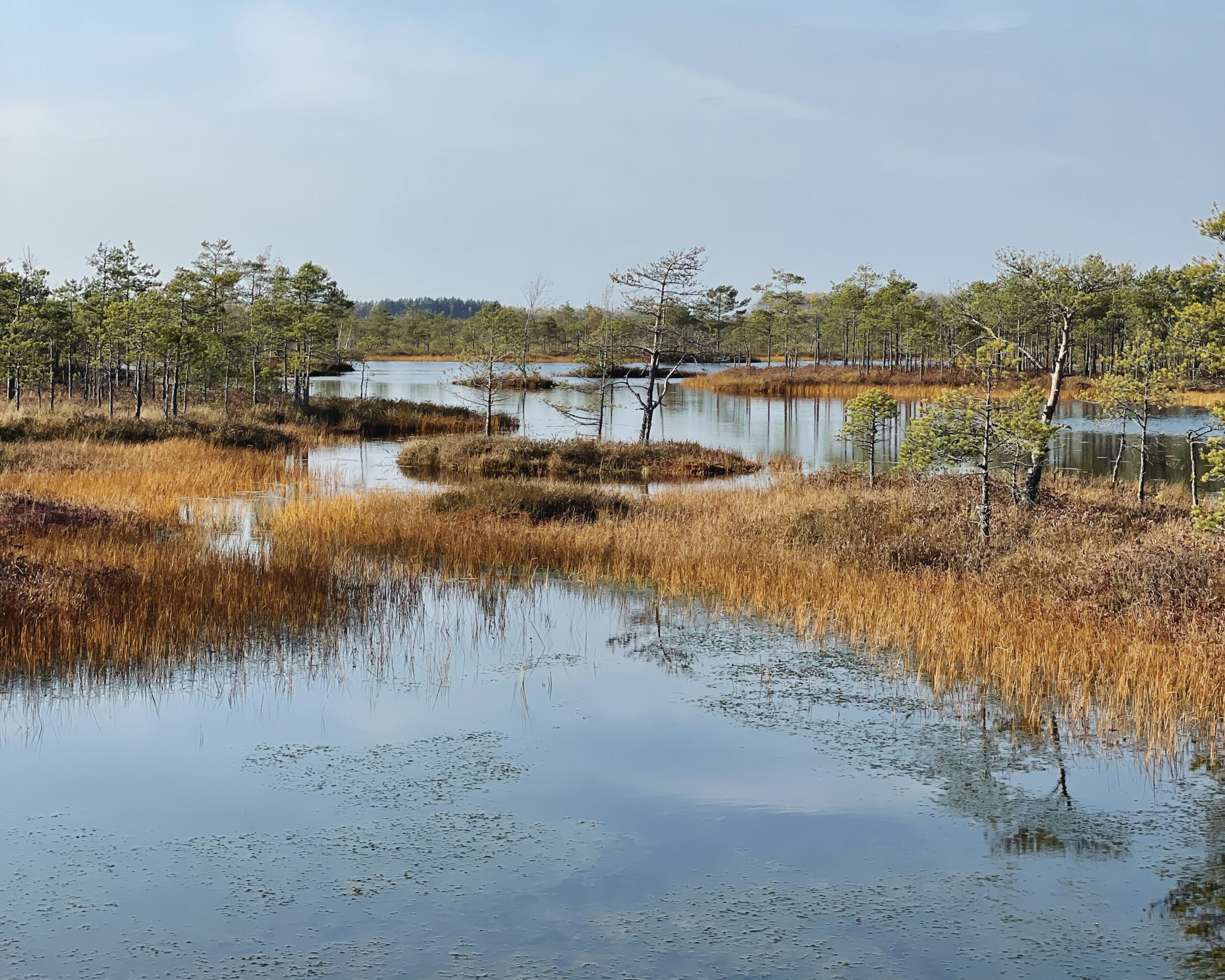
In the surrounding area the place is known as an exceptional spot for cloudberries, yet for foragers it is cranberries that are most abundant here. Deep in the heart of the bog lie several remarkably picturesque bog lakes, dotted with a whole cluster of tiny islets, each crowned with a pine or two. In winter it is a joy to glide around them on tour skates; in summer you can swim out to soak up the sun on them.
You can reach the bog from several sides; on one of them stands the small RMK Meelva forest cabin, near which lies the picturesque Lake Meelva — always warmer than the region’s other waters. To the north a path also leads to a second bog-side lake: the long, narrow Padoni, reaching deep into the mire. Hikers can also explore the Meelva bog with an experienced guide — see Visit Estonia for details. Summer lies long ahead — come visit!