
Lembit Tõemäe — The Man Whose Cry of “That’s My Boy!” Rang Across the Hall
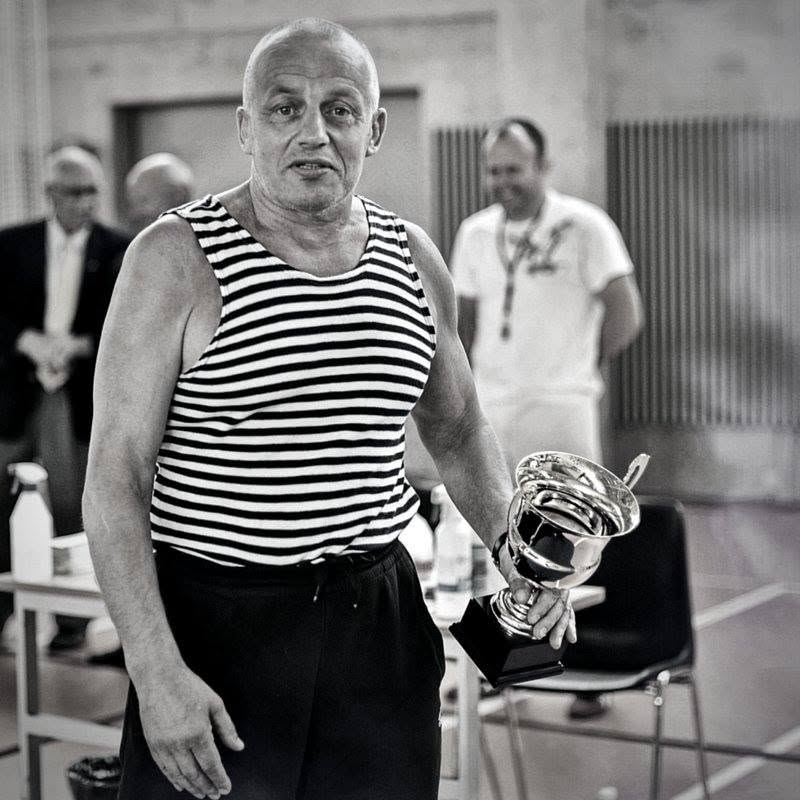
If you never knew Lembit Tõemäe, picture a man small in stature, extraordinarily tough and always on the move, who needed few words to make his presence felt. As a wrestler, he stood 169 centimetres tall and weighed 66 kilograms. In wrestling circles, he was known as Siil — “the Hedgehog”.
The building at 7 Metsa Street has a long sporting history. We have been gradually uncovering its story, and behind every sport we discover people whose dedication has left a mark on Põlva. This time, the story brings us to wrestling. And to a man named Lembit Tõemäe.
“That’s my boy!”
Those who worked alongside Lembit or trained under him probably remember his voice first. It could be stern when an exercise was done carelessly or a failing grade appeared on a school report. At competitions, that same voice took on an entirely different tone. When one of his boys won, Tõemäe’s delighted cry would ring across the hall: “That’s my boy!”
There was more in that cry than satisfaction with a single result. It held early mornings, bus journeys, hundreds of training sessions, mistakes corrected, and the knowledge of how much a young wrestler had put into that moment. Other coaches and competitors knew the boys from Põlva. They respected them because of the work that had gone into their training.
Lembit Tõemäe was born in Tallinn on 11 December 1949 and took up wrestling in 1967. He graduated from Pärnu Boarding School and, in 1978, from the Faculty of Physical Education at the University of Tartu, with honours. That last detail says quite a lot about him. For Tõemäe, sport and education always belonged together. He valued knowledge and expected his pupils to do the same.
Before coming to Põlva, he worked for the Ookean fishing industry enterprise and the Tallinn Ship Repair Yard. In 1983, he became a freestyle wrestling coach at Põlva Sports School. Over the next 31 years, the country, institutional names and arrangements for funding sport all changed. Yet Tõemäe kept coming to the gym, and new boys kept taking their first steps on the mat.
Thirty kilometres, 500 cubic metres of firewood, and the life stories of sporting greats
Sometimes he travelled from his hometown of Räpina to Põlva by bicycle, sometimes on skis or on foot. For readers unfamiliar with the area, that is a journey of 30 kilometres. It was no demonstration or feat of heroism. Sometimes it was simply the only way to get there. There was a training session to run, and he had to arrive.
Tõemäe’s training went well beyond wrestling techniques. Football built endurance, while physical strength was sometimes developed in places few people today would call a gym. During the 1980s, Põlva’s young wrestlers spent their summers at work and training camps on the Estonian island of Hiiumaa. Before lunch, they split firewood; afterwards, they stacked hay bales in barns. One summer, the boys split roughly 500 stacked cubic metres of firewood.
There were work camps in Värska, too. These were no weekend outings: they lasted a whole month. The days were filled with work, training and living together. At a camp like that, it soon became clear who made an effort only when the coach was watching, and who finished their share even when no one was there to praise them. Tõemäe said that work itself was the toughest training of all.
A hay bale does not care whether an athlete is having a good day. A woodpile does not build itself while you talk about willpower. You have to pick up the next log, make the next movement and finish what you started. In Tõemäe’s teaching, strength and responsibility went hand in hand.
But he was interested in more than building strong bodies. While the boys exercised, their coach might read aloud from the biographies of famous athletes. Alongside the smell of sweaty training clothes and wrestling mats, the gym was filled with other athletes’ victories, defeats and life experiences. Tõemäe wanted his boys to think, as well as to throw an opponent.
He kept an eye on their school grades, too. Before the end of a school term, a boy might receive a blunt reminder not to let a failing grade appear on his report, because he would only have to make it up later. In that sense, a poorly learned school lesson was like a wrestling move only half mastered: sooner or later, you had to return to it.
Being a strict coach did not mean being a solemn one. Tõemäe loved joking and telling funny stories. Alongside his demanding nature, those who knew him remember his warmth, his gift for conversation, and a man whose own life revolved largely around the boys and their training.
Training is still on!
One former pupil’s memory captures Tõemäe’s determination particularly well.
Once, a moose ran out in front of his Zhiguli car. The car left the road, ended up by a river and became wedged between two trees. Tõemäe was taken to hospital by ambulance. Meanwhile, the boys were waiting at the sports school for training to begin, until word arrived that their coach had been in an accident.
At first, the boys were pleased. Training would be cancelled.
But it wasn’t.
Tõemäe had left the hospital and turned up limping, his face a patchwork of cuts and bright green antiseptic. The session went ahead.
Someone else might have considered that reason enough to miss an evening. Apparently, Tõemäe did not. Training had been arranged, the boys were there, and so it had to happen. His former pupil remembers him simply as “one very tough bloke”.
A coach’s life’s work
In 1999, Tõemäe founded the Põlva Wrestling Club Lapiti. It was more than a new name on competition results sheets: the club gave wrestling in Põlva a home and a sense of continuity. Several generations of athletes grew up under his guidance, among them Jaanus Kala, Marko Troon, Tarmo Vikat, Indrek Nõmm, Jaanus Kiik, Kaider Kalm, Gunnar Koitsaar and Elar Hani.
Hani began training with Tõemäe in 1997. He went on to win multiple Estonian championship titles and compete at European and World Championships. Perhaps even more significant is what happened after his competitive career. Elar Hani became a coach, carrying on the work Tõemäe had begun. Hani later said that he had never needed to build Lapiti from scratch: his coach had already done that.
The building at 7 Metsa Street also has its place in the story of wrestling in Põlva. Originally built as a shooting range, the sports building is remembered for shooting, orienteering, driving lessons and technical sports, as well as wrestling. There has been a mat here, training sessions have taken place, and people have learned the same simple lessons taught in every good gym: to turn up, to make an effort and to get back up after a fall.
Exactly when Tõemäe himself coached at 7 Metsa Street, and which stories belong within these particular walls, still needs to be pieced together from local people’s memories. Old documents provide dates and job titles, but rarely tell us who stayed behind after training, which joke made the boys laugh, or how loudly the coach’s voice carried through the building.
These are the stories we want to preserve at 7 Metsa Street. A building’s history lives in more than its architecture or its original purpose. It also lives in the people who came here, trained, worked hard and helped one another move forward.
One thing is certain: wrestling belongs to the story of 7 Metsa Street. And Lembit Tõemäe’s presence runs throughout the story of wrestling in Põlva.
In 2010, 2011 and 2012, he received the trophy for Estonia’s best freestyle wrestling coach. He was awarded Põlva County’s lifetime achievement award in sport and named Põlva Municipality’s Person of the Year. These honours speak of his achievements. But something else brings us closer to the man himself.
Candles in the gym, and boys who knew what to do
On 27 February 2014, Põlva’s young wrestlers gathered at the sports school gym as usual. That day, they were supposed to play football. Their coach did not arrive. A few hours earlier, Lembit Tõemäe had died unexpectedly at the age of 64.
That evening, candles lit by the boys burned in the wrestling gym. The older pupils took the younger ones under their wing, and training continued.
A person’s life’s work can be measured in medals, honours and years of service. But sometimes its true meaning reveals itself in a quiet gym. The coach is gone, yet his boys know what to do next.
For those who never knew Lembit Tõemäe, perhaps the image that remains is of a tough, determined man on the road from Räpina to Põlva, on skis or with a bicycle at his side, because a training session was waiting. Or of him limping towards the sports school, his face marked with bright green antiseptic, because that evening, too, the boys were waiting.
For those who knew him, it is probably his voice that comes back.
“That’s my boy!”
Photos: Private collection
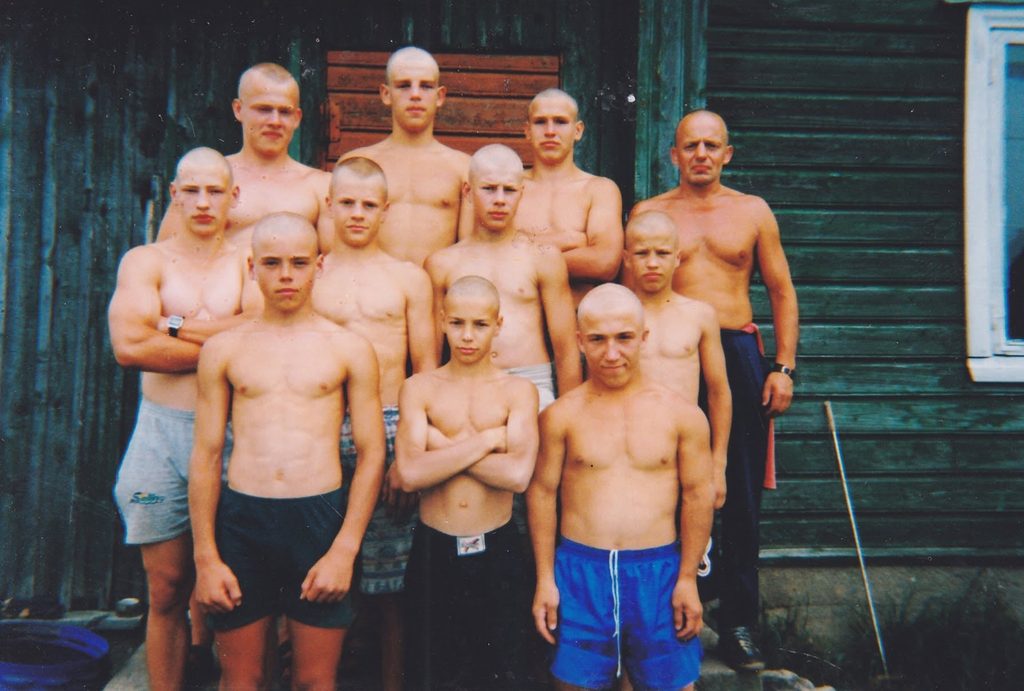
Photo: Maaleht
