Lake Põlva
In Põlva, the lake has never been merely a body of water in the middle of town. For locals, it has been a place for summer swimming, evening walks and a familiar sight they may pass without even turning to look. The lake is simply there – like the church, the cultural centre or the forest on the edge of town.
Yet Lake Põlva has not always existed. As recently as the 1960s, the River Orajõgi flowed through this spot, surrounded by wet, marshy meadows. In the summer of 1966, the dam gates were closed and water began to fill the valley. This was how the Põlva reservoir was born – an artificial lake constructed on the basis of a graduation project by EPA student Vambola Murdoja.
In 1994, however, the lake disappeared almost entirely. The dam and bridge had deteriorated, the water was polluted, and the shallow lake was rapidly becoming overgrown. The reservoir was drained, leaving the lakebed dry for years. Many older residents of Põlva still remember the strange sight: there was no longer a lake in the middle of town, only a muddy valley where the old channel of the River Orajõgi had reappeared.
Between 1997 and 1999, the lakebed was deepened, the silt was removed and an artificial island was created. It was not until 2000 that the dam gates were raised again and the lake refilled with water. A similar scene unfolded in the summer of 2021, when the lake was drained once more to rebuild the bridge and dam regulator. No thorough cleaning was carried out at the time, however, and an estimated 310,000 cubic metres of silt has now accumulated on the lakebed. Preparations for another major clean-up are still under way.
Lake Põlva therefore conceals the old Orajõgi valley beneath its waters. The river has not disappeared; it continues to flow quietly through the reservoir to this day.
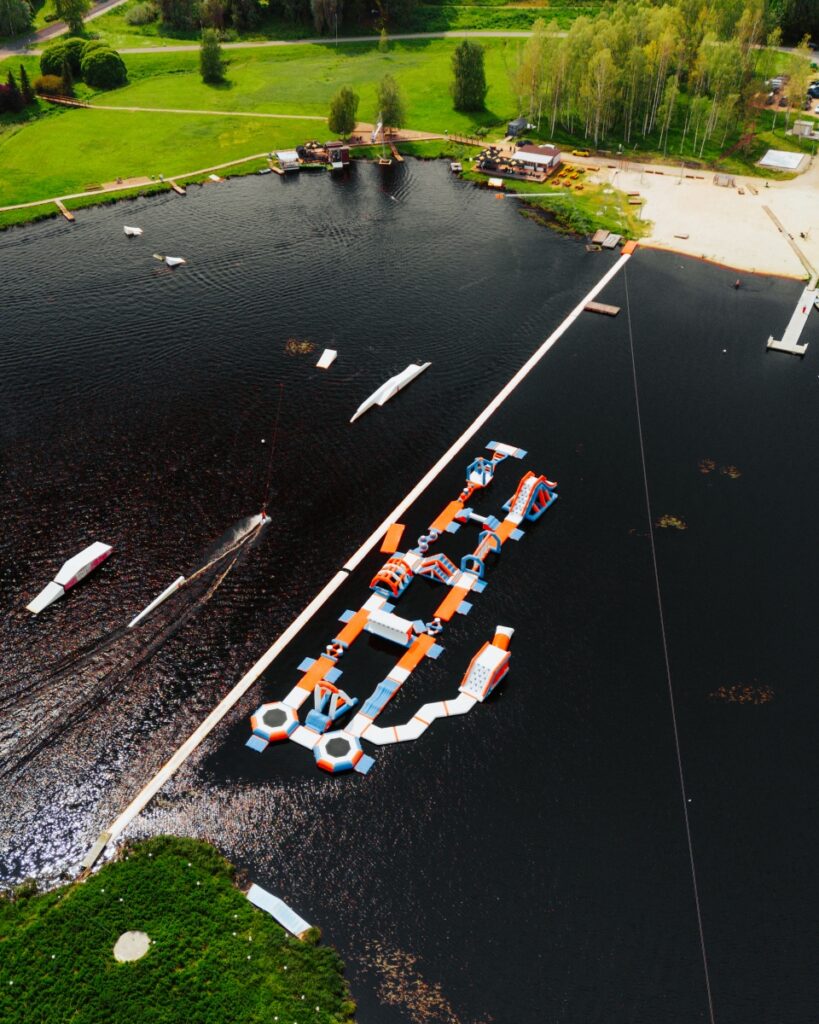
Then posts, cables and concrete structures appeared on the lake.
At first, most people did not quite understand what was being built. A wake park seemed somehow unexpected for Põlva – like something better suited to the seaside or a larger resort town. The idea may even have seemed a little too bold for our peaceful lake, where the biggest events had previously been days at the beach and fishermen swapping stories.
But perhaps that was precisely why it was needed.
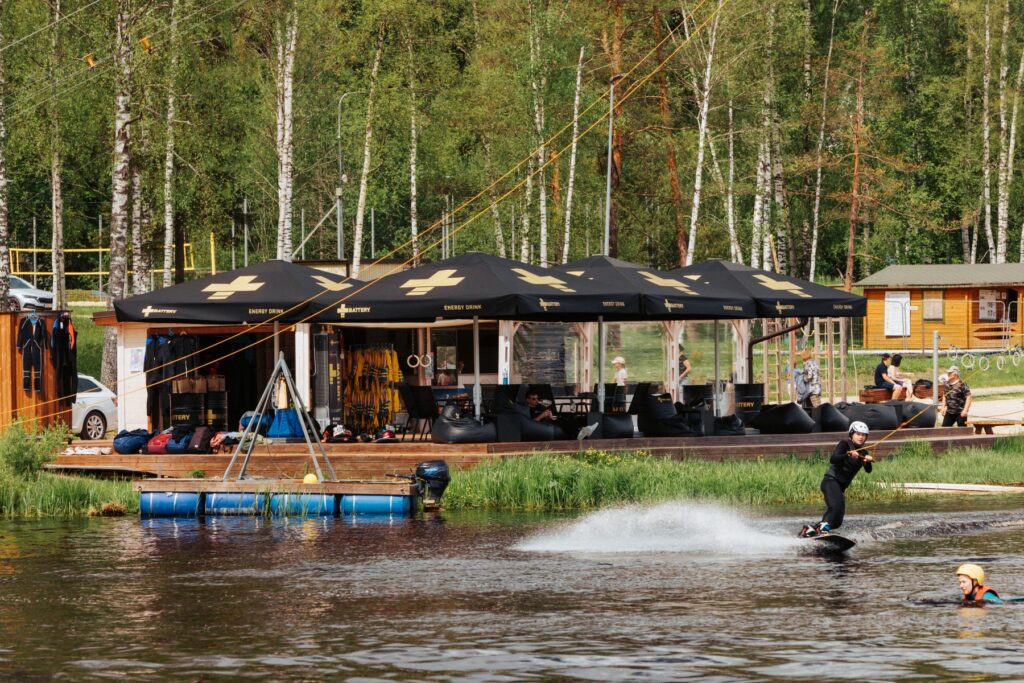
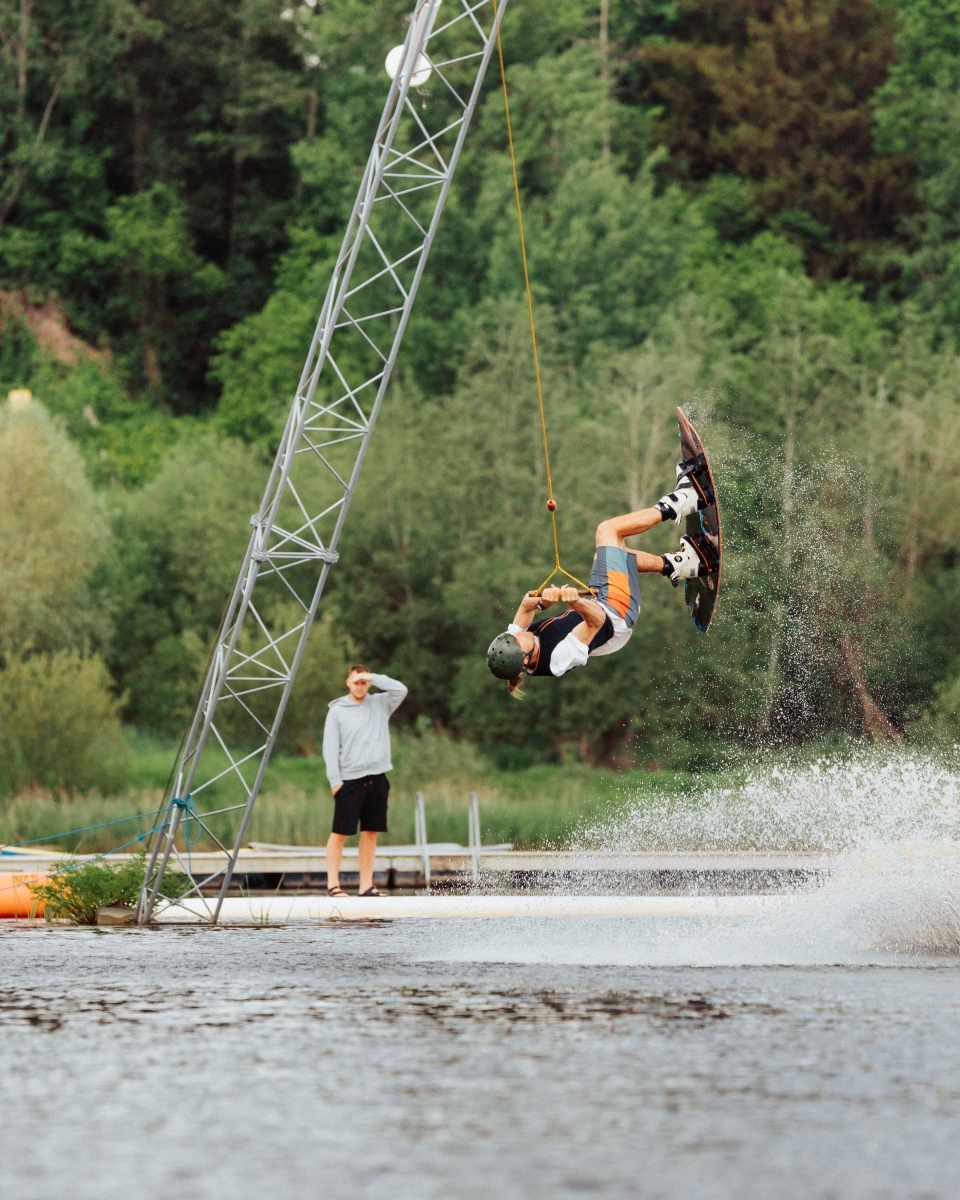
Põlva Municipality had been developing the idea of a wake park for years. When the park was finally completed in 2023, the municipality’s role had been to create the venue and the necessary infrastructure. A facility alone, however, is not enough to bring a lake to life. It needed people who would bring the first riders onto the water, teach beginners and demonstrate that the park was not intended only for those who already knew how to perform flips in the air. Põlva Wakepark OÜ and its dedicated team gave the park its everyday momentum.
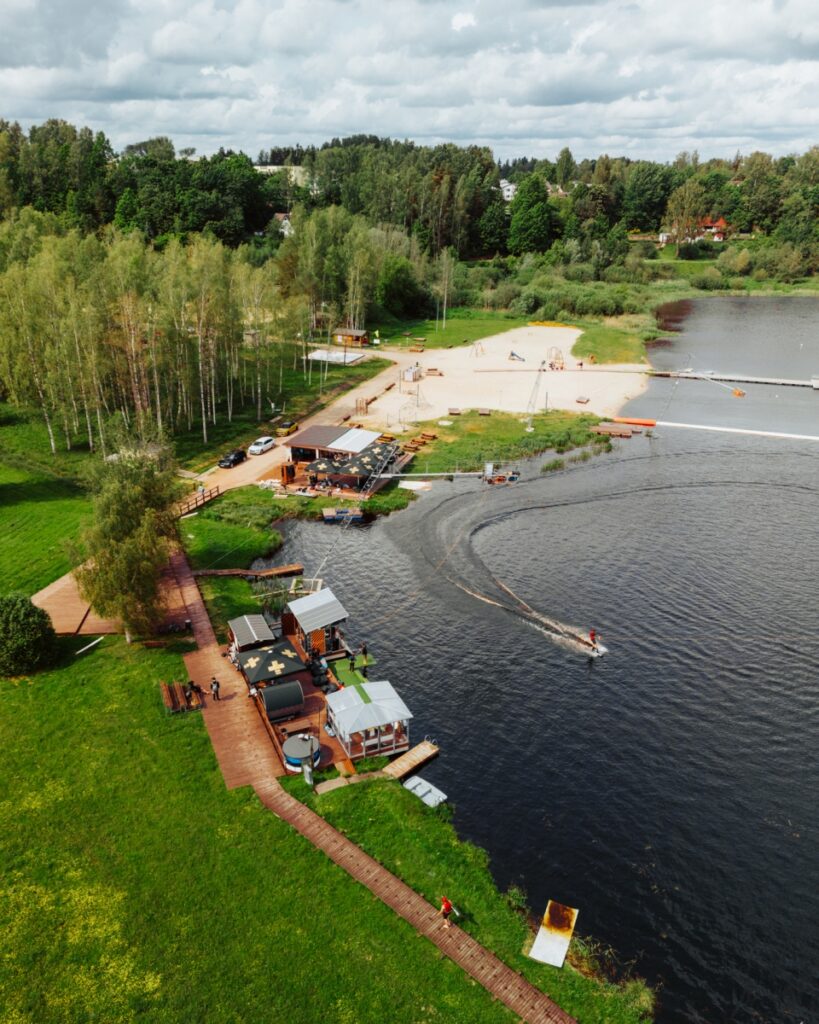
The change did not arrive with a bang. At first, people watched from the shore – some out of curiosity, some cautiously and some simply because something new was happening on the lake. Then the first, bolder visitors took to the water. They were followed by children and young people who discovered that they did not have to travel to Tallinn or abroad to go wakeboarding. At some point, the wake park ceased to be a strange new structure and became part of summer in Põlva.
During its first season, the park was visited mainly by children and young people. Now entire families come to the beach, and parents are increasingly joining in rather than remaining on the shore to watch. An inflatable adventure park – known locally as the “rubber town” – has appeared on the lake beside the wake park, offering children and adults alike the chance to climb, jump and fall into the water. Sometimes it seems that those having the most fun are the ones who originally came only to accompany their children.
The wake park has brought life not only to the water. Beach cafe has become a place where people come to relax after a ride, have something to eat or simply enjoy being beside the lake. It attracts locals, visitors from further afield and, from time to time, a familiar face who also stops at the beach café after spending time at the wake park.
Nor do visitors necessarily have to step onto a wakeboard when they come to the beach. They can play volleyball and indiaca, while young people ride bicycles and scooters on the pump track. Some come to exercise, others to visit the café, and still others simply to watch life unfolding on the lake. People often stay longer than they originally intended.
This is where the wake park’s greatest impact lies. A single new attraction has drawn an entire beach area together around it. A place people once merely passed through on a walk has now become a destination. Children, parents, young people, athletes and summer visitors meet here – from Põlva and from further afield. Many grandparents in Põlva also remark that their grandchildren who live elsewhere are now happy to spend their summers visiting them.
In a small town, this matters more than may be apparent at first glance. Põlva no longer always has to be a place people leave in search of something exciting to do. Sometimes people now come here instead.
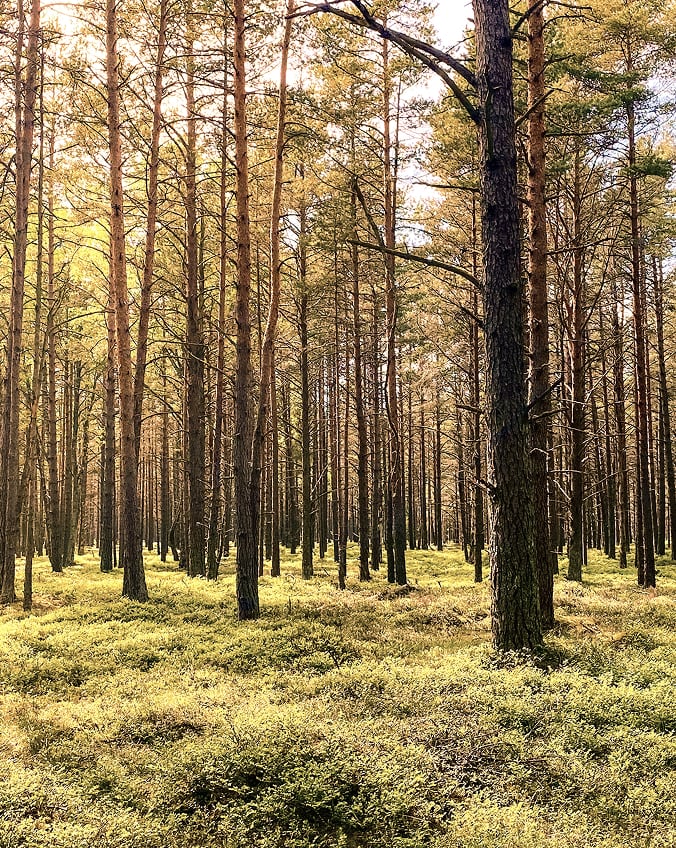
From the perspective of the future Metsa 7 hotel, Põlva beach also reflects an important change. There is no need to invent activities for visitors – life is already here. Forest trails, the lake, the wake park, ball courts, pump track and beach café are all closer together than someone accustomed to a larger city might imagine. All that is needed is a place that connects these opportunities.
Lake Põlva is still the same lake beside which we have walked for years. Only now, the gentle sound of water is joined by the hum of the cable, scores being called out from the ball courts and a shout of joy after someone completes their first successful lap on a wakeboard.
The wake park did not merely bring movement to the lake. It brought the entire Põlva beach area to life.
These lovely photos of Põlva Wakepark are from pwakepark.ee