Into the water with a kuurits – an old way of fishing lives on in south-eastern Estonia
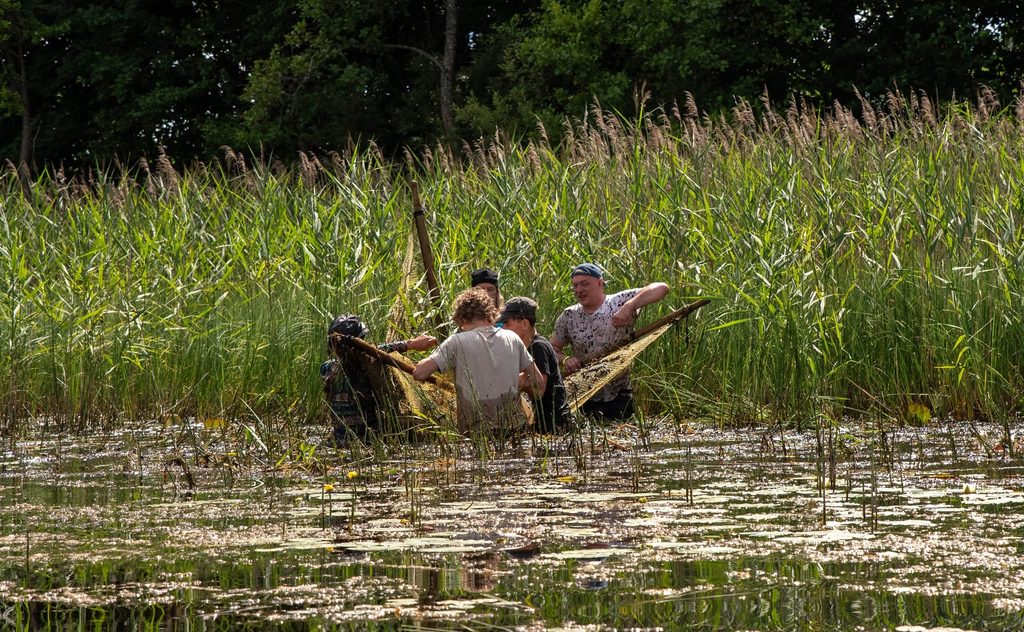
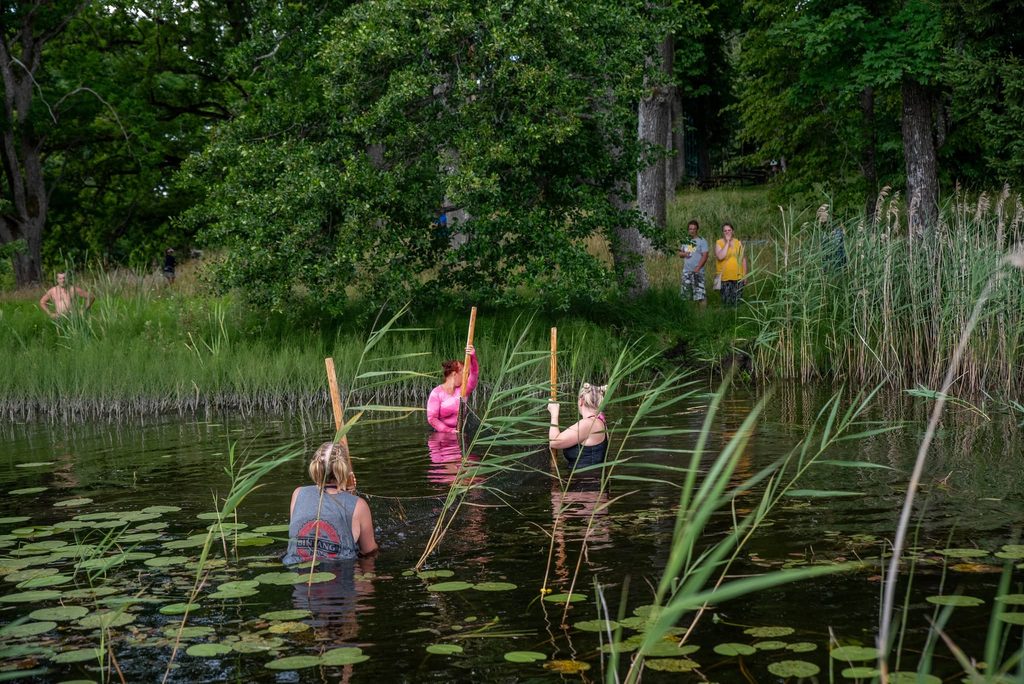
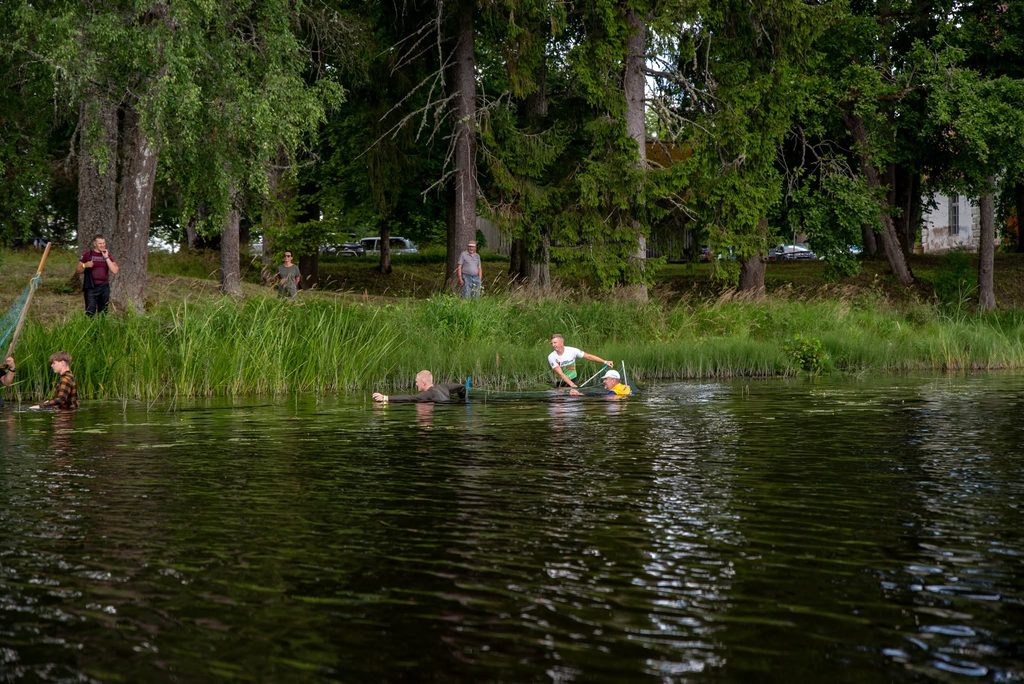
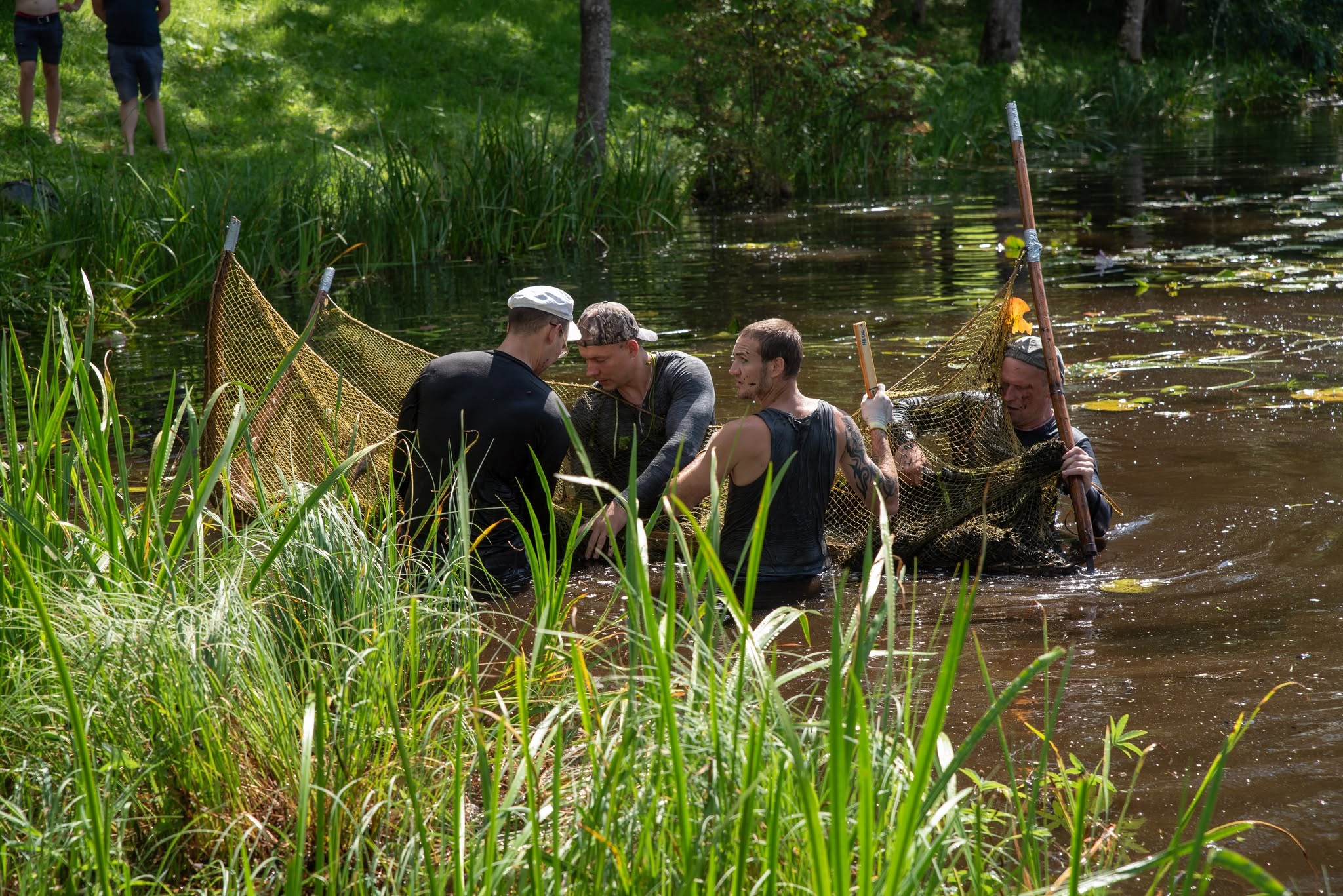
A curious group is making its way through a lake in Haanjamaa. Three people are holding on to a wooden frame, while a fourth busies himself beside them. In places, the water comes up to their chins. Their feet are in the mud, and no one seems in any hurry to get back to shore. Then they lift the net, and a fish flashes among the weeds and branches.
That’s how you fish with a kuurits. It’s an old way of fishing that many people have never heard of, though there are still people in southern Estonia who know how it’s done. In Haanjamaa, some still have their kuurits, know how to handle it and are happy to take newcomers into the lake with them.
A wooden frame, a net and four people
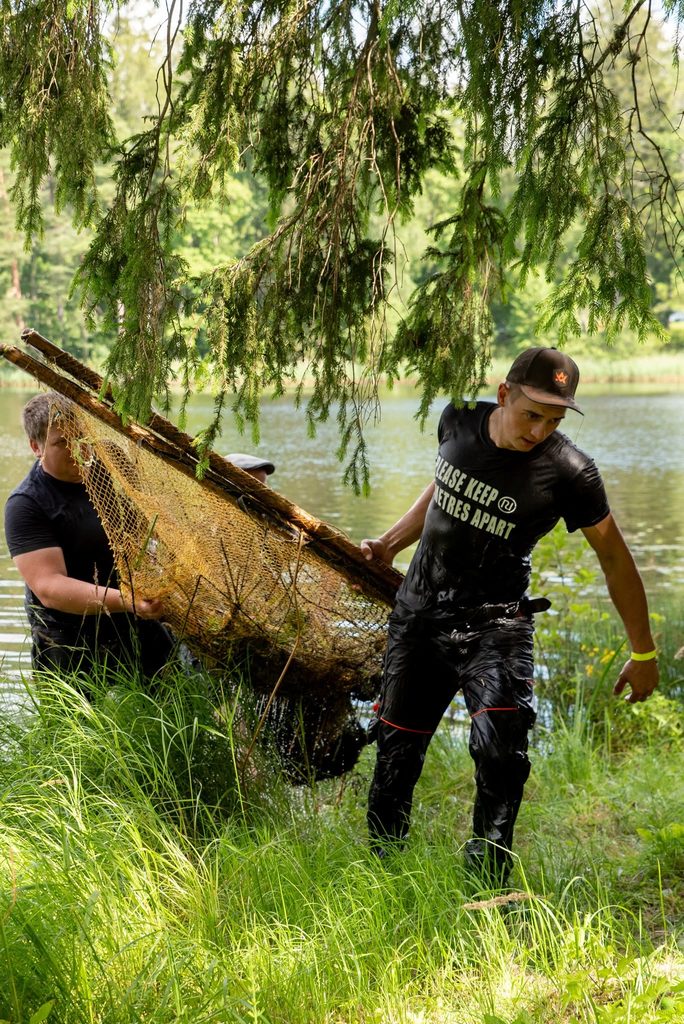
A kuurits is a fishing net attached to a wooden frame and dragged along the lake bed. It usually takes three people to move it. The fourth, known as the kotipoiss, or ‘bag boy’, helps gather the catch and pick the fish out from among the weeds and branches caught in the net.
The frame has to move in step with the people pulling it. You have to find a rhythm together, hold the kuurits the right way and pull your feet free of the mud. It pays to listen to someone who knows the lake. They know where the bottom is firm, where the water gets deeper and where the fish might be hiding.
The net might bring up roach, perch, pike, bream or tench. First, though, you have to find them in all that greenery. With every haul the lake gives you weeds, branches and whatever else is lying on the bottom. Undersized fish go straight back into the water.
There’s no telling how much you’ll catch, but there’s plenty to see from the very first haul.
A skill passed down on local farms
Fishing with a kuurits is closely associated with Vana-Võromaa and Haanjamaa. Local families passed on what they knew by going out on the lake together. The younger ones started out as bag boys, watched their elders and gradually learnt to pull the net themselves.
In earlier times, loosely woven cloth was sometimes used in place of a net. The Võro expression kallu rõivaga tõmbaminõ, meaning ‘pulling fish with cloth’, goes back to that practice.
It’s hard to say exactly when the kuurits arrived here. On Haanjamaa’s farms, knowledge of it goes back several generations. Fishing together once helped put food on the table. Today, every newcomer taken out onto the lake gives the skill another chance to live on. And, of course, it gives them a day they’re unlikely to forget.
The kuurits fishing competitions at Viitina and Kavadi have also helped keep the practice alive. There you can see how the old fishing gear works and how much the catch depends on everyone working together.
Before you wade in, you’ll need tape
The first surprise may come before you even leave the shore. You put on clothes that cover your arms and legs, pull on a hat and tape your shoes firmly to your feet.
There’s a reason for all of it. Branches on the lake bed can scratch your arms and legs, and the soft mud has a habit of hanging on to your shoes. Horseflies circle above the water, which makes long sleeves and a hat a pretty good survival strategy.
Then you step into the lake.
Beneath the smooth surface lies a landscape you can’t see from shore. You have to feel the bottom with your feet. In one spot you have firm footing. In another, your foot sinks deeper into the mud. Sometimes the water comes up to your waist. In places, only your head is above water. With an experienced guide beside you, you begin to get a feel for how to move through it all.
Fishing with a kuurits is hard physical work. After a couple of hours of wading, you’ll feel it in your arms and legs. Your attention soon narrows to whatever is happening right then. Where to put your foot. How to keep in step with the others. What’s in the net this time. Then a fish stirs among the weeds, and everyone gathers around the net again.
That’s what makes kuurits fishing so much fun, even if you’ve never been fishing before. Beginners can join in straight away, learn as they go and try it for themselves. Riho is one of the people who fish with a kuurits in Haanjamaa. You can see him in ERR’s Maahommik segment on kuurits fishing, where you can watch the group pull the net and pick out the catch.
Back on shore
Some parts of kuurits fishing only make sense once you take hold of the frame and start moving with the others. It’s easier to give it a go with someone experienced beside you, even if at first you spend more time dealing with mud than with fish.
And if your legs are tired when you get back to shore and your shoes are still on your feet, you’ve already learnt a thing or two for next time.
If you’d like to try fishing with a kuurits or find out more about how it works, visit Haanjamaa Kirbutalu’s Facebook page.
Photos: https://www.facebook.com/kuurits/photos?locale=et_EE