
The Architects of Metsa 7
Please allow us to introduce ourselves — we are the authors of the architectural concept for Metsa 7. We are Mari Hunt Architects, and our previous work includes hotels with a distinctive atmosphere as well as small-scale buildings set in nature. For a long time we have explored how to create hospitality architecture that does not dominate the existing landscape, but becomes its natural continuation. For us, designing special places to stay is about balance — enough character to be memorable, yet with the restraint needed to respect the environment.
Why Metsa 7?
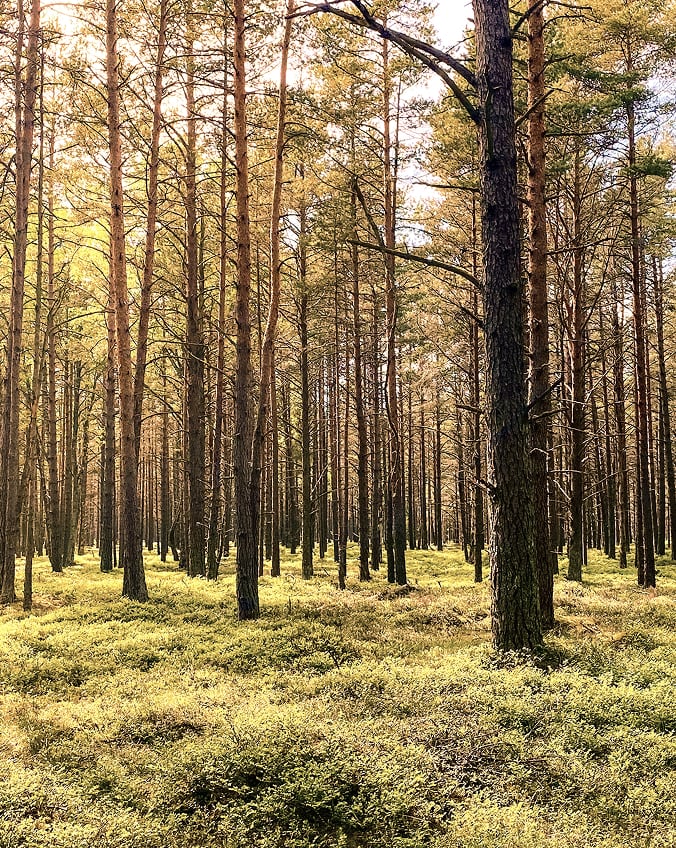
The location of Metsa 7 is exceptional. On one side lies the park forest of Intsikurmu with its trails; on the other, a stadium and sports infrastructure. Nearby are also the springs of Järvsuu and the Lumbioja stream. This is not a site meant only for a hotel plot — it brings together nature, sport, and community. The architecture does not create a new world here; it structures the existing potential into a clear whole.
The detailed plan allows for up to 10,000 m² of enclosed net area and a height of 23.1 metres. The question was not how much could be built, but how to build in a way that the volume would not dominate the landscape and nature. One of the key principles of Metsa 7 is symbiosis — preserving the shooting range and sports functions and integrating them with the new hotel volume.
This project matters because it is not just a new place to stay — it is a regional hub. A place to stop, to train, to hold seminars, to go to the forest, to come to the sauna, and to be part of a community.
What will Metsa 7 be like?
Metsa 7 is a multi-layered building that brings together accommodation, sport, culture, and public space. Its architectural clarity is expressed in a horizontal volume interwoven with a vertical play of form. Greenery in both the inner courtyard and on the roofs adds softness and a sense of play.
The spatial programme includes hotel rooms and suites, seminar rooms, a restaurant and café, sports facilities, the shooting range, a bookshop, and a community lobby.
The challenge and the charm of the project
The main challenge is, of course, placing very different functions within one building. A hotel, café, restaurant, sports areas, shooting range, and community spaces — each has a different use pattern and level of privacy. The architectural solution must create clear circulation schemes and acoustic buffers so that one function does not disturb another. With so many functions, some spaces also need to be cleverly designed for shared use.
What makes the project special is that the layout of the hotel rooms clearly departs from traditional and widespread design. Instead of a wall and a television, the view from the bed opens directly out of the window. The bed is the central element of the room: waking up, the guest looks straight into the forest — and on the upper floors even above the treetops — rising together with nature. All ground-floor rooms have their own private sauna with direct access outdoors, just as in a true sauna. This creates the feeling of a small personal cabin within a larger building.
What is unique here?
The distinctiveness of Metsa 7 lies not only in its volume or its mix of functions, but in its spatial emphasis. One of the project’s special features is the sauna centre.
The saunas are in direct contact with the landscape, close to the Intsikurmu park forest and the Lumbioja stream. The sauna complex is not only part of the hotel but a destination of its own — a cluster of smaller sauna houses that invites both locals and visitors to relax among views, forest, and water.
The hotel’s wine cellar will also offer special experiences. Whether for a festive event, relaxation after sport, or a spontaneous visit, the wine cellar (and the attic) can host memorable social gatherings in a thoughtful and authentic space. And of course the hotel restaurant, with its greenhouse on the roof — looking out over the primeval valley towards the horizon.
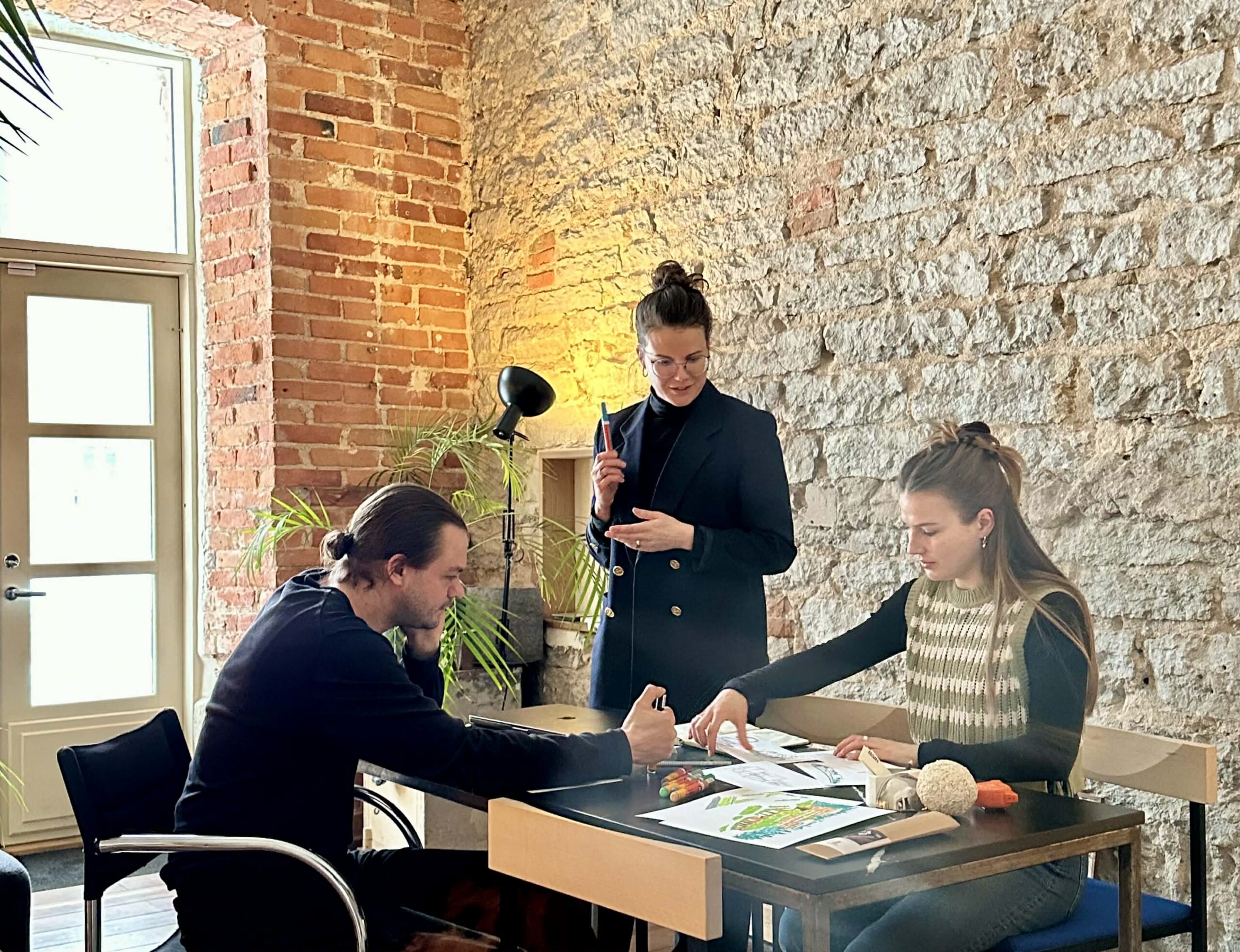
In the photo: architects Arvi Anderson, Mari Hunt, Grete Daut.